After the Open: What Your Performance Was Trying to Tell You
Don’t Just Look at the Surface—Use the Hierarchy
Most people will stop at the obvious:
- “I need to get better at pull-ups.”
- “My conditioning needs work.”
- “I need to lift heavier.”
And while that’s not wrong… it’s incomplete.
At CrossFit, we talk about the theoretical hierarchy of development:
Nutrition → Metabolic Conditioning → Gymnastics → Weightlifting → Sport
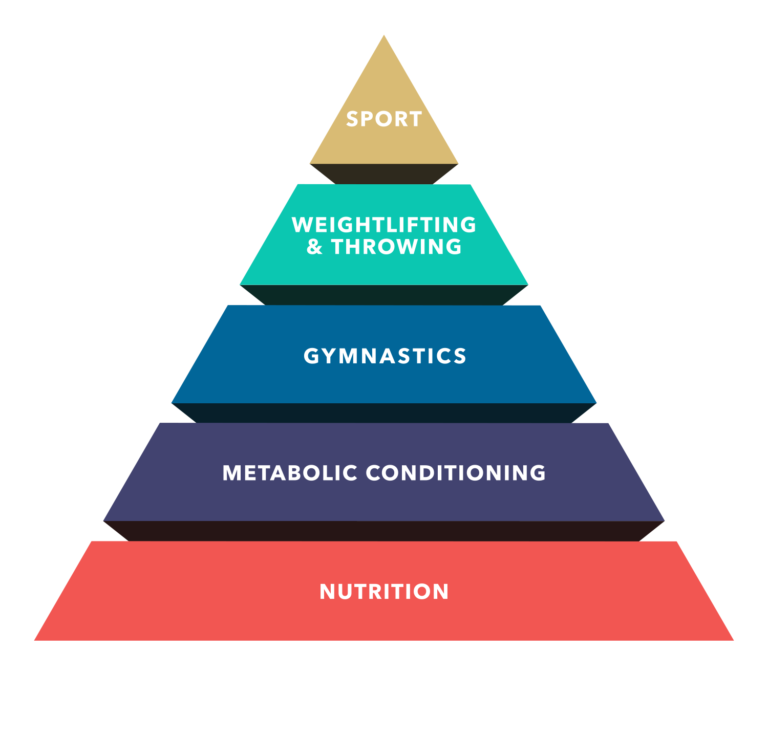
This is your roadmap.
And more importantly—it’s your troubleshooting tool.
Example: When the Workout Exposes a Wall
Take a workout where gymnastics became the limiter....26.2???
Maybe you hit a wall on pull-ups.
Maybe you couldn’t get your first muscle-up.
At the surface level, you might say:
“I need to work on gymnastics.”
But let’s go deeper.
- Was it actually your engine?
- Were you too fatigued by the time you got there?
- Is your nutrition supporting your performance?
Because if you’re carrying excess body fat, you’re essentially doing gymnastics movements with a weighted vest on.
So now the issue may not just be skill—it could be:
- Conditioning
- Or even nutrition
This is how you use the Open correctly.
Use Your Percentile Rankings—They Tell a Story
One of the most underutilized tools from the Open is your percentile ranking.
If you registered for the Open, you can go back and look at where you ranked in each workout—both worldwide and within your division.
And this matters more than people realize.
For example:
- Workout 1: 90th percentile
- Workout 2: 70th percentile
That gap is telling you something.
It means there is a clear difference in how you perform under different demands.
Now the question becomes:
- What was different about those workouts?
- Was it the movements?
- The loading?
- The time domain?
- The energy system required?
This is where real insight comes from.
Don’t just look at the number—study the difference.
That’s how you start identifying patterns in your fitness.
Stop Cherry Picking—Start Training Like It Matters
Another big takeaway:
We have to stop cherry picking workouts.
Too many people check the app and decide whether or not they’re coming to the gym based on what’s programmed.
We need to throw that mindset away.
You don’t get better by avoiding your weaknesses.
You get better by confronting them.
👉 The days you don’t want to come in…
are probably the days you need the most.
Keep Testing Yourself (Not Just Once a Year)
The Open shouldn’t be the only time you test your fitness.
There are opportunities all year long:
- Local CrossFit competitions
- CrossFit Broken Chains own - "Battle of Narcoossee" (held in November)
- Olympic weightlifting meets
- Barbell Club cycles
These don’t have to be intimidating.
In reality, they’re low-risk, high-reward opportunities to:
- Experience a competitive environment
- Learn how you perform under pressure
- Continue gathering data about your fitness
The more you expose yourself to these moments, the more comfortable—and capable—you become.
Build What Broke Down
If a barbell felt heavy—we build strength.
If you had to break too often—we build capacity.
If skills limited you—we train them intentionally.
Nothing is random.
Everything is connected.
And everything the Open exposed can be improved.
The Unsexy Stuff Still Matters Most
If your nutrition isn’t dialed in…
If your sleep is inconsistent…
If your recovery is an afterthought…
You are capping your potential.
That’s why we continue to emphasize:
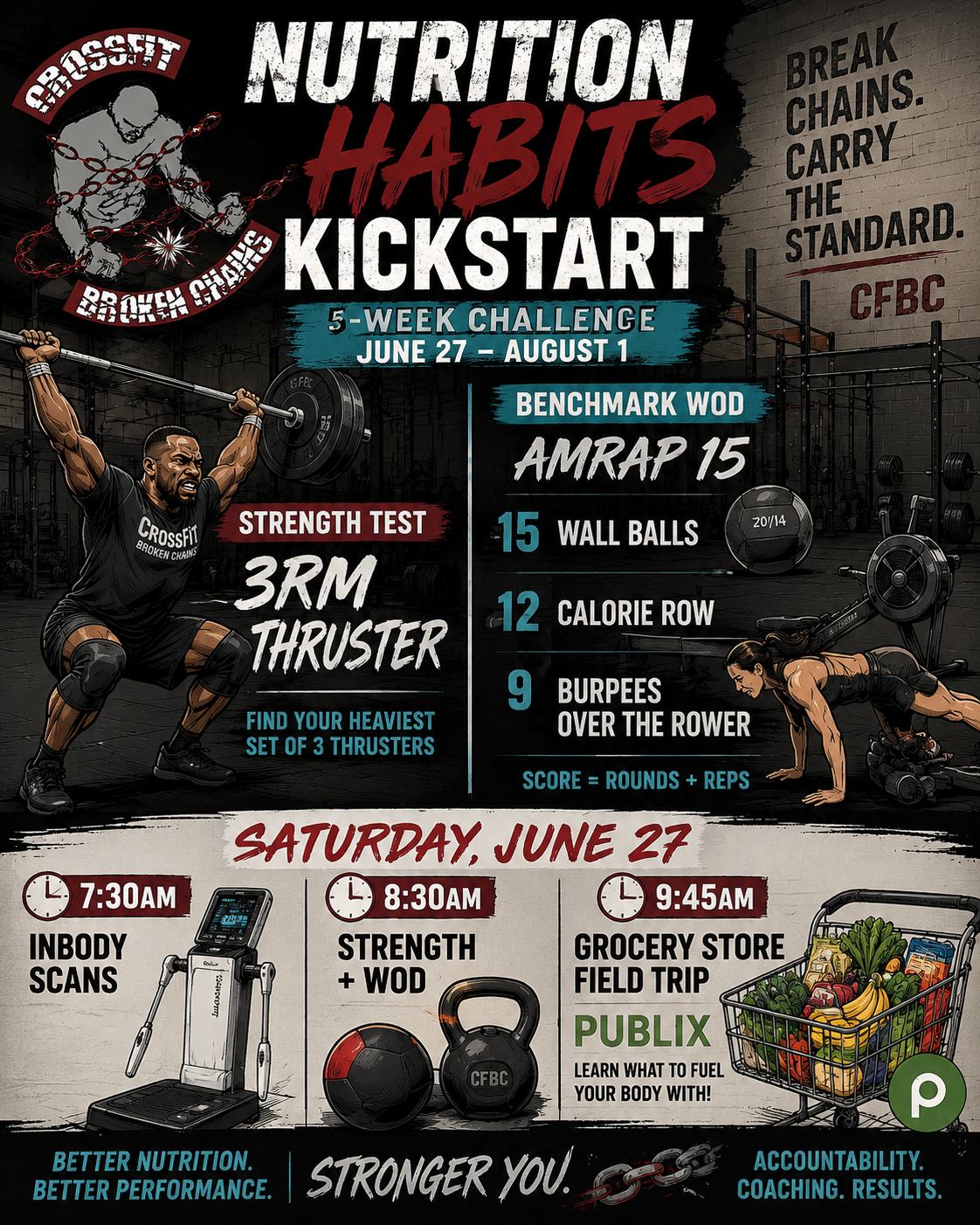
- Nutrition Habits Challenges
- Consistency in training
- Recovery and lifestyle habits
Because that’s the foundation everything else is built on.
Final Thought: Don’t Waste This
The Open gave you clarity.
It showed you exactly where you are.
Now the responsibility is yours.
Don’t let this just be something you did for fun.
Don’t let it be something you forget in a week.
Take what you learned.
Apply it.
Train with intention.
Because the athletes who improve year after year aren’t the ones who just show up for the Open…
They’re the ones who use it.
And at CrossFit Broken Chains, that’s exactly what we’re going to do.